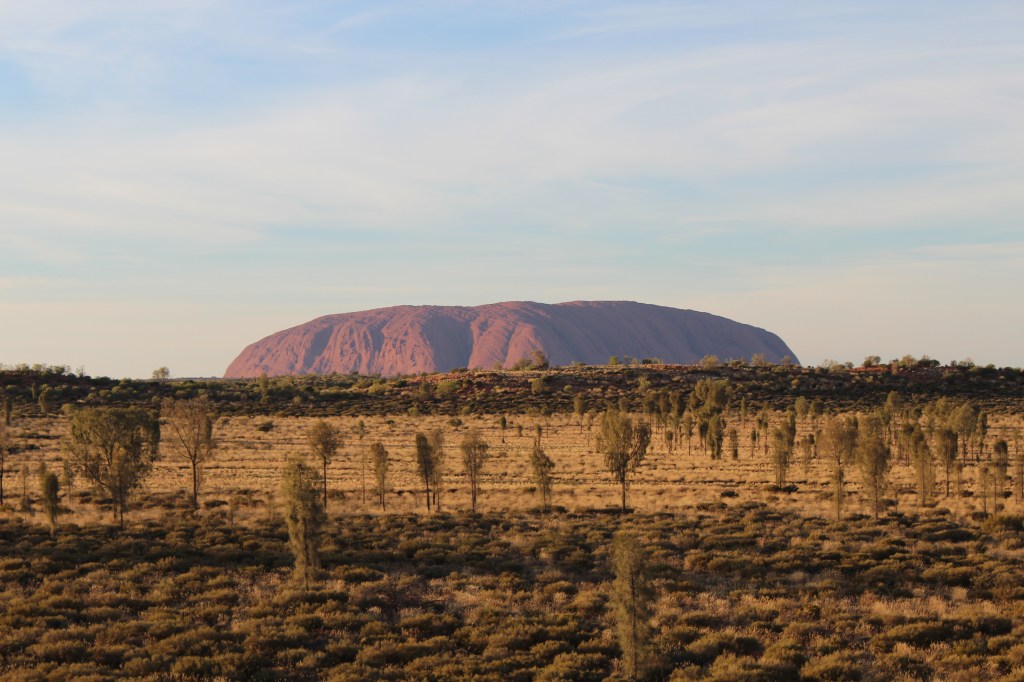
Known as the red centre, Uluru is a UNESCO world heritage site and a proud national icon in the middle of outback Australia. Spectacular at any time of day, the changing colours from sunrise to sunset is one image you’ll never forget. A sacred place to the Aboriginal people of Australia, Uluru holds historical significance, especially to the native people of the area (known as the Anangu).
Exploring Uluru-Kata Tjuta National Park
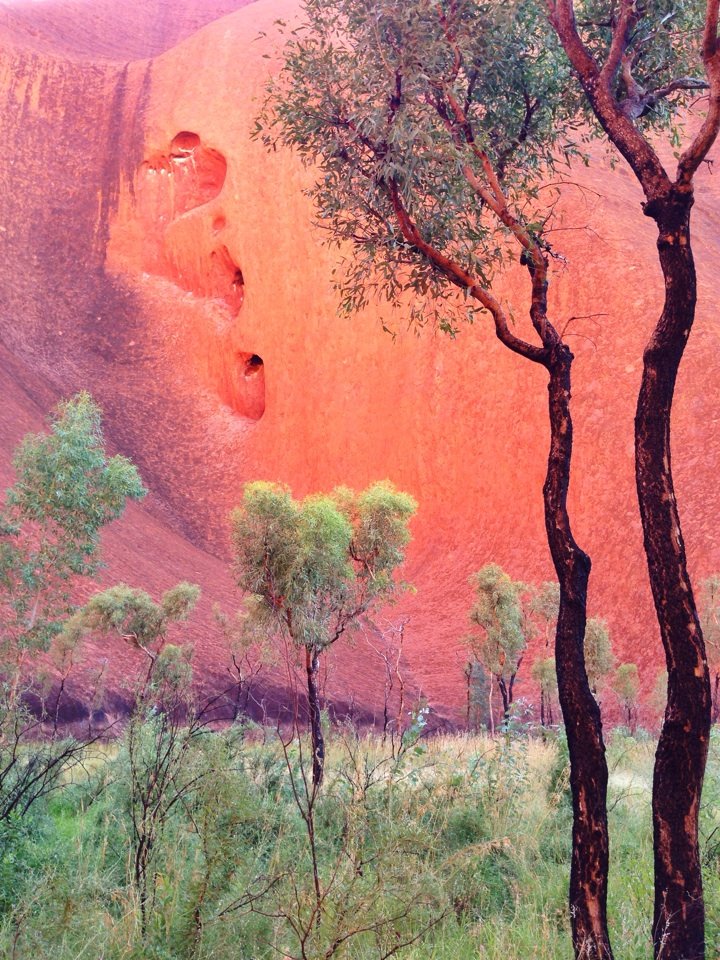
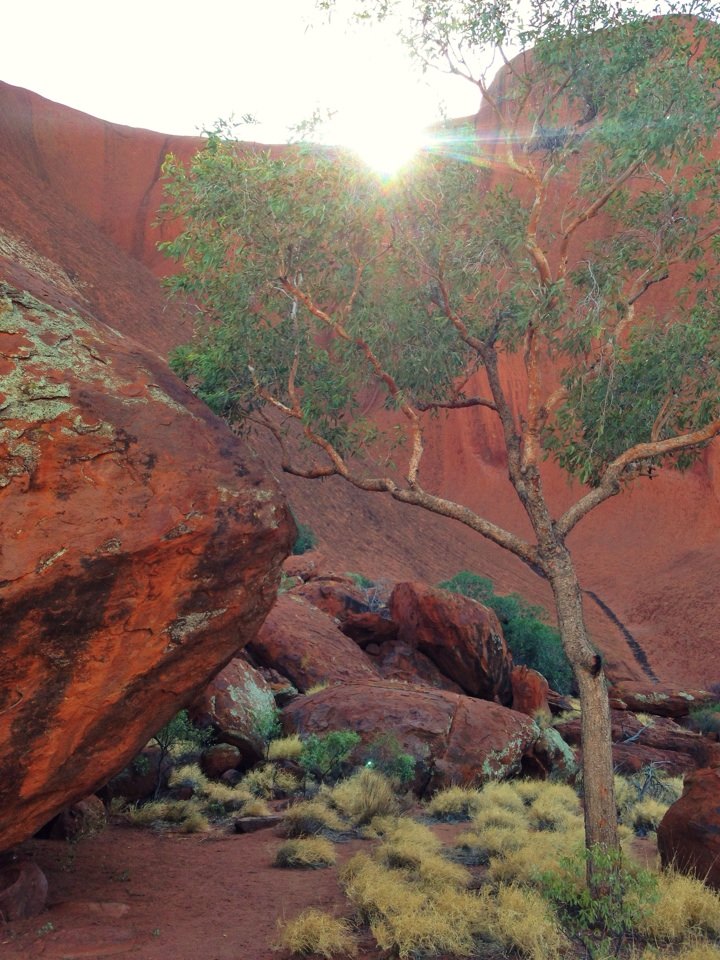
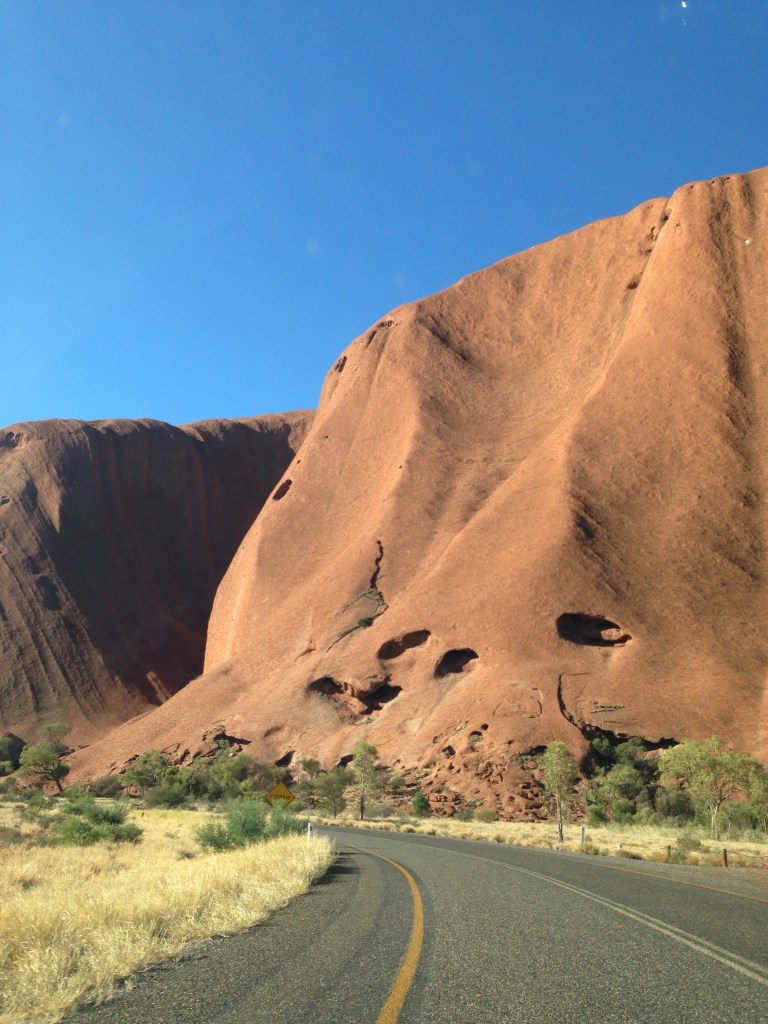
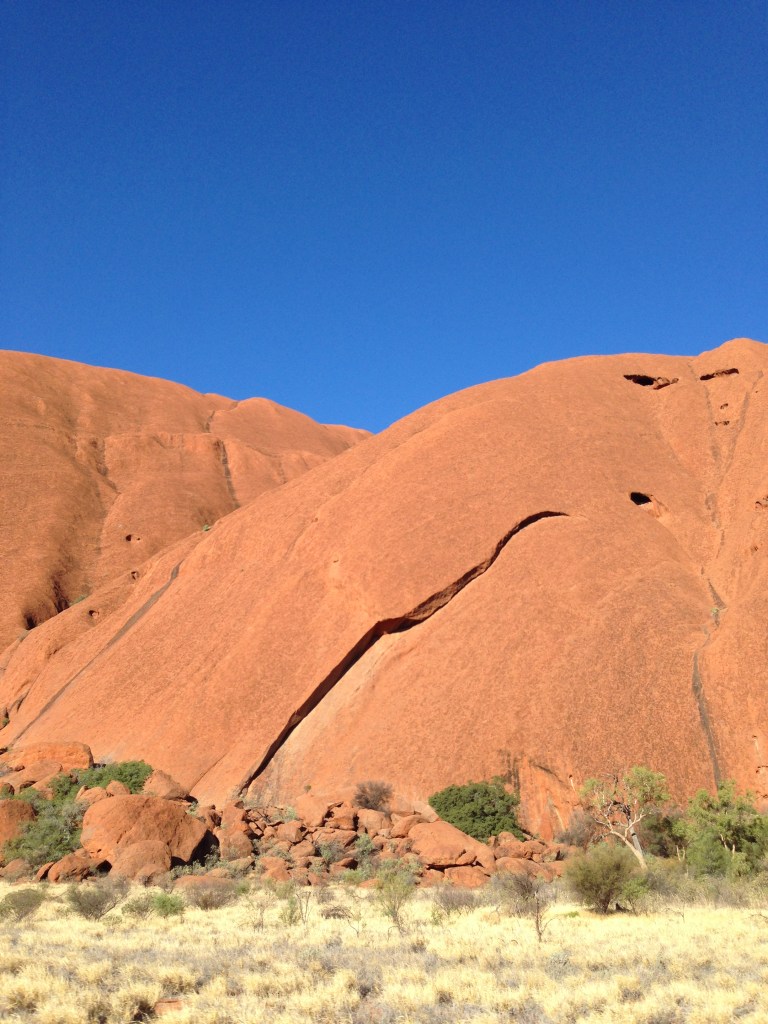
It’s not until you’re up close and personal that you really appreciate the full scale of Uluru, the colour pallet of the rock and the shadows it casts. The Uluru Base Walk is roughly a 10km trail that takes you right around the rock. As the weather was super hot and the flies were in abundance, we opted to drive the road around and do shorter walks to the sights from the Mala Walk carpark.
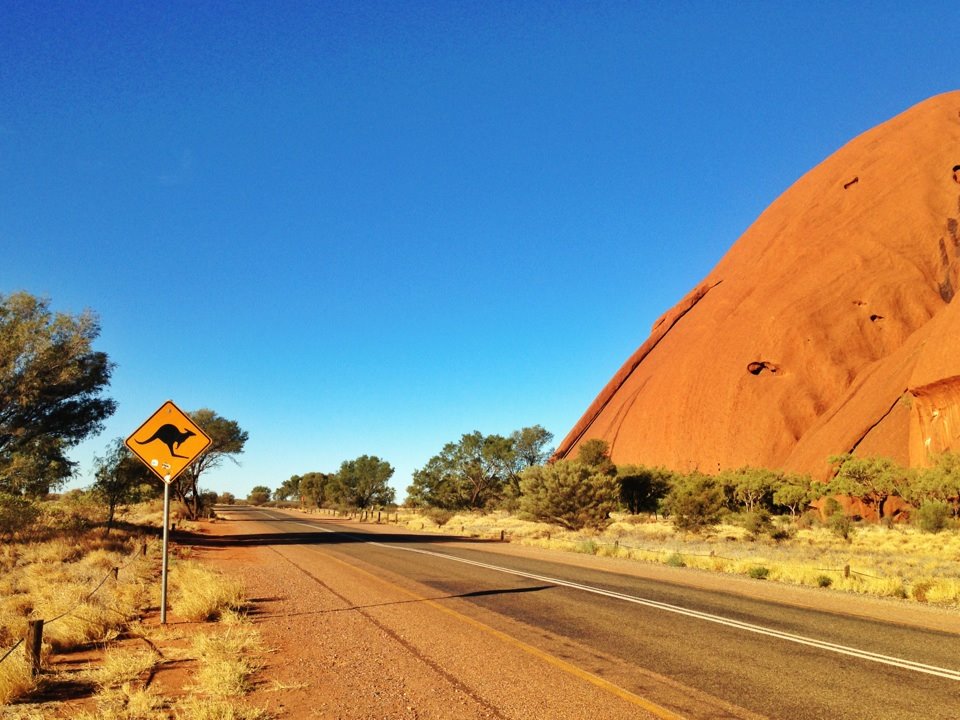
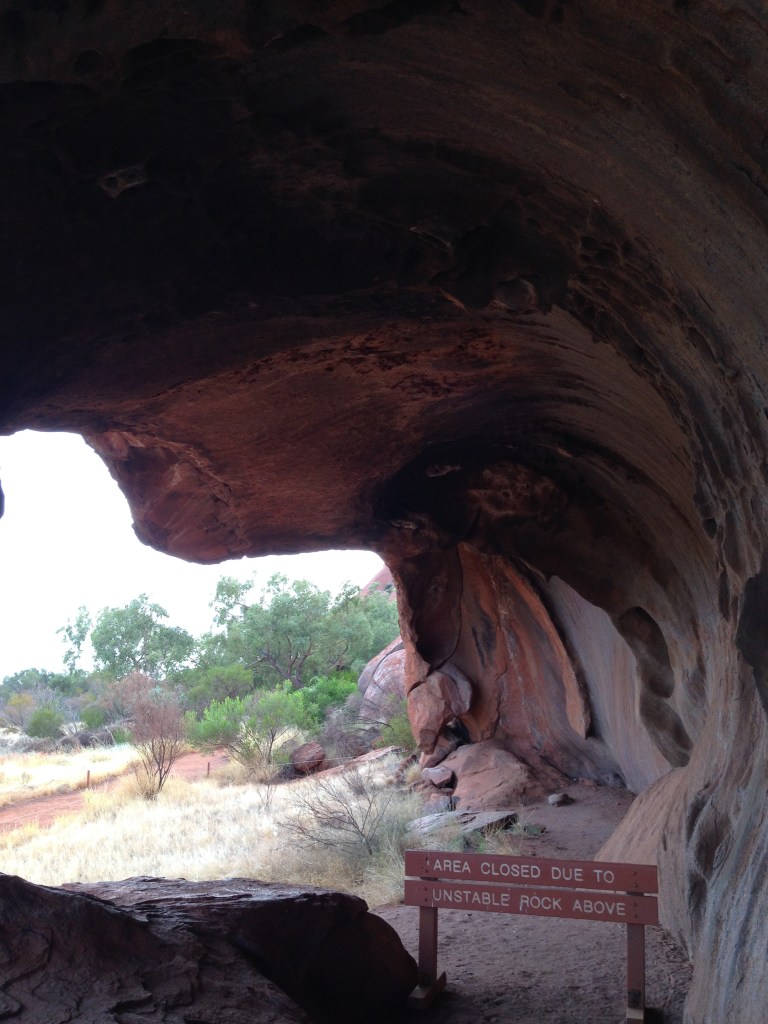
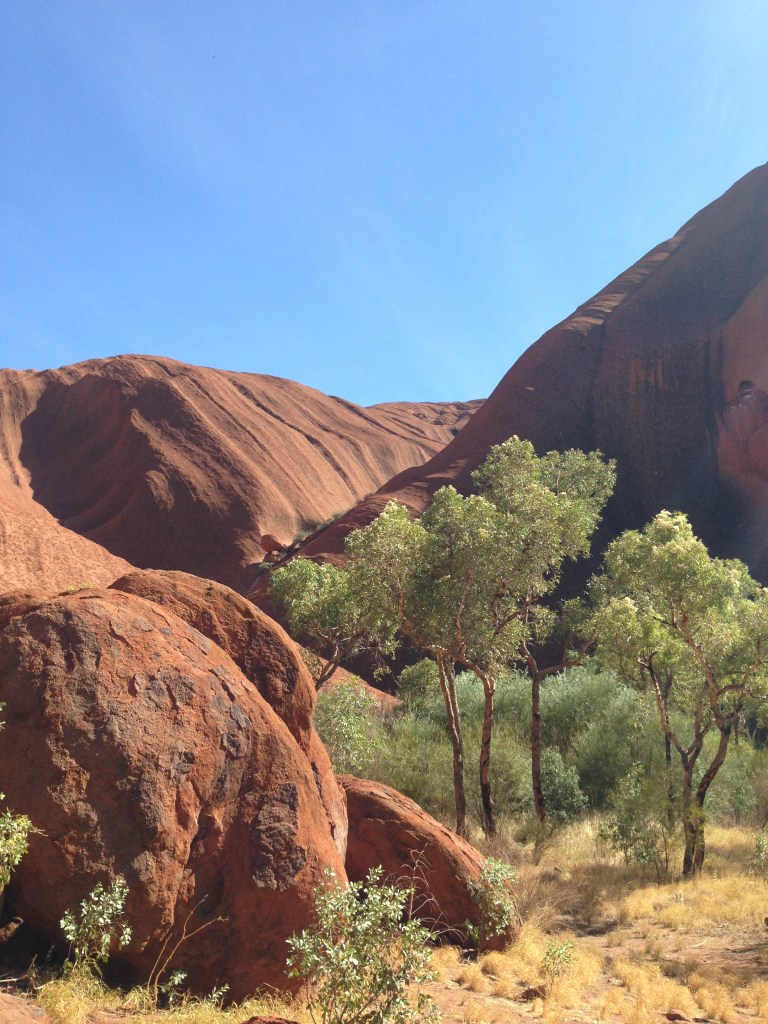
To the left of the Mala walk carpark is the Kantju gorge walk where you’ll pass caves, see Aboriginal rock art and reach the beautiful gorge at the end. They do have daily ranger-guided walks that you can join for free but we weren’t there at the right time so we did the walk ourselves. It’s an easy, pleasant walk with lots of little information plaques along the way.
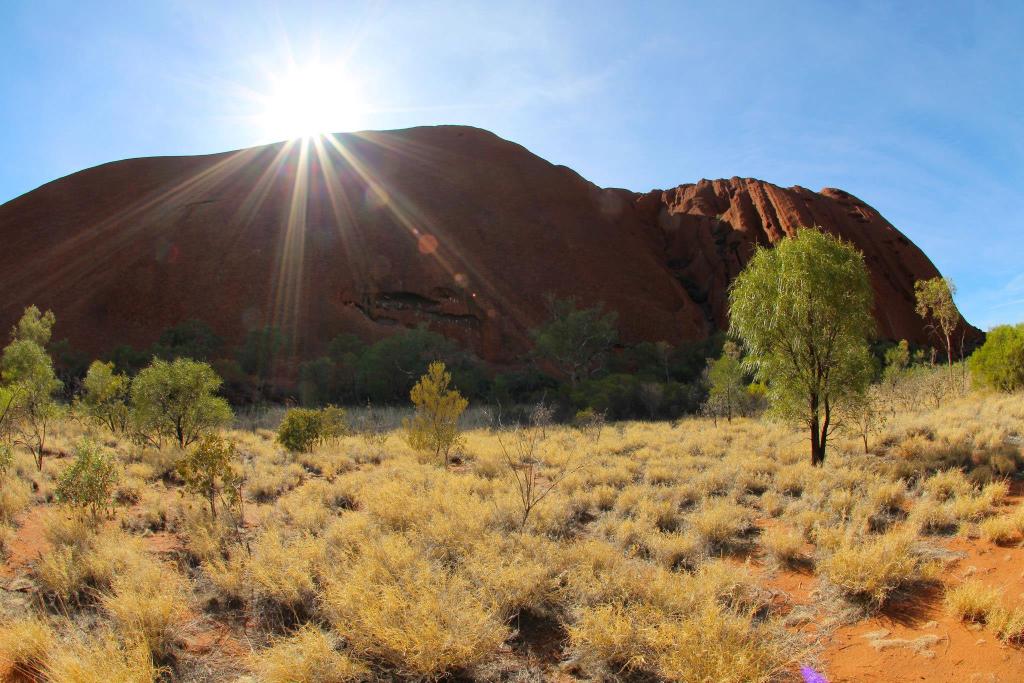
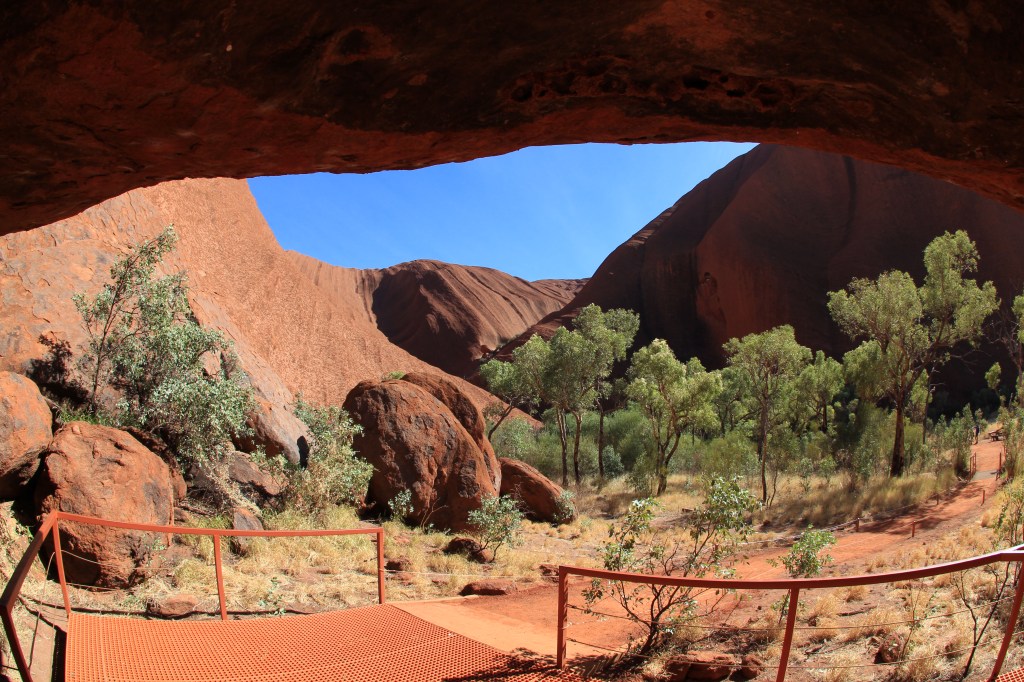
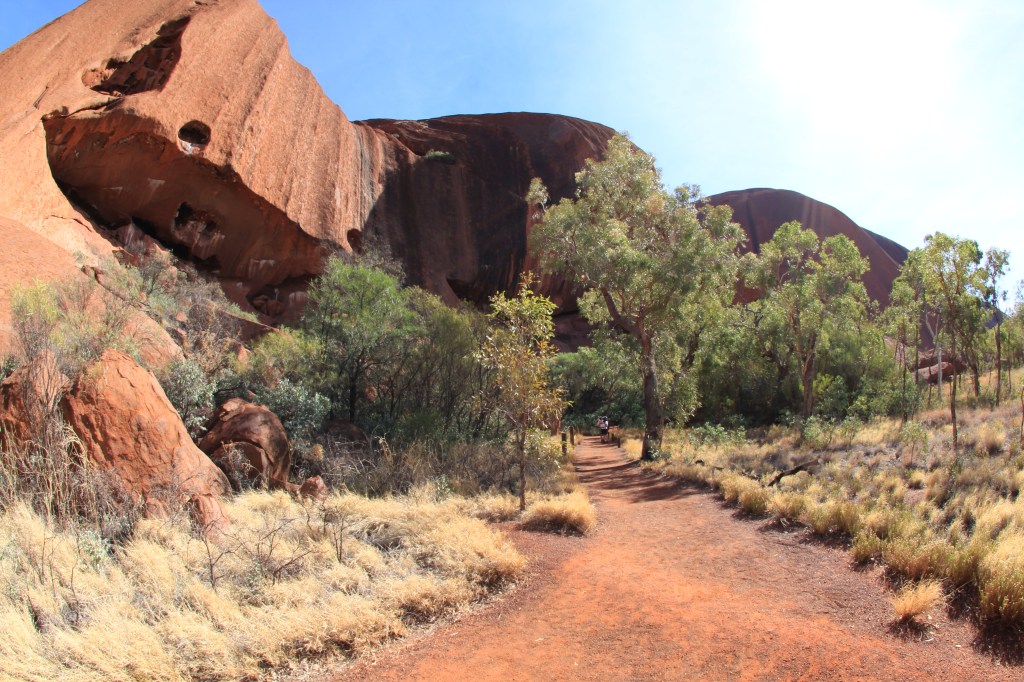
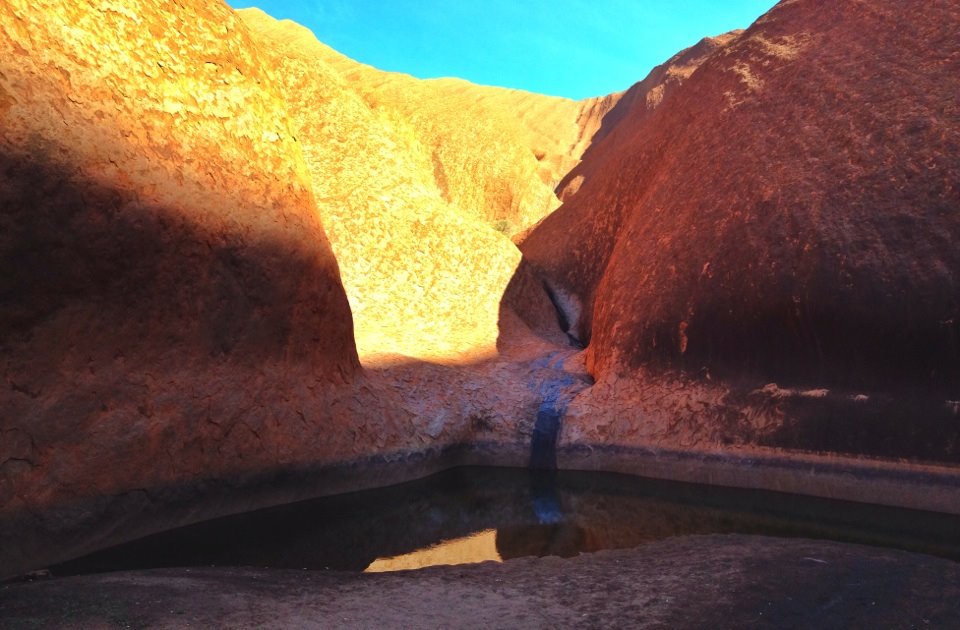
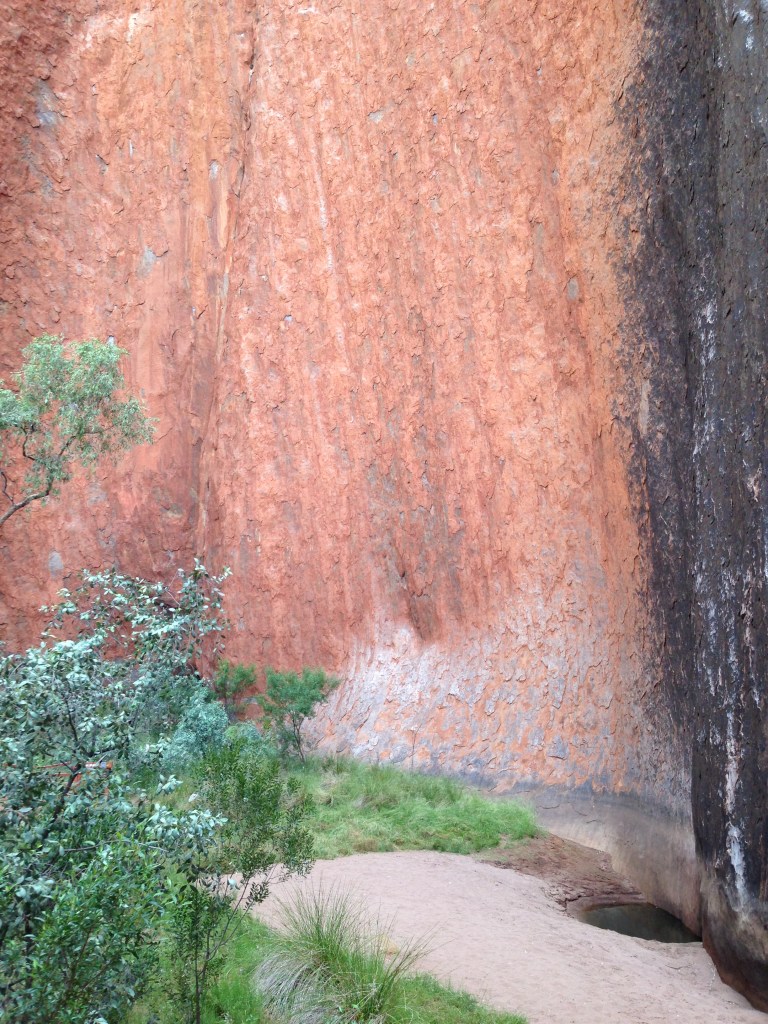
To the right is the Lungkata walk, Kuniya walk and the Mutitjulu waterhole which is approximately 4km return. With the track running so close, you can see how the wind and water has shaped Uluru. As it was early morning, there was hardly any crowds, any sun (hidden behind Uluru) and no flies – perfect!
It’s worth checking out the Uluru-Kata Tjuta information centre, cultural centre and art galleries.
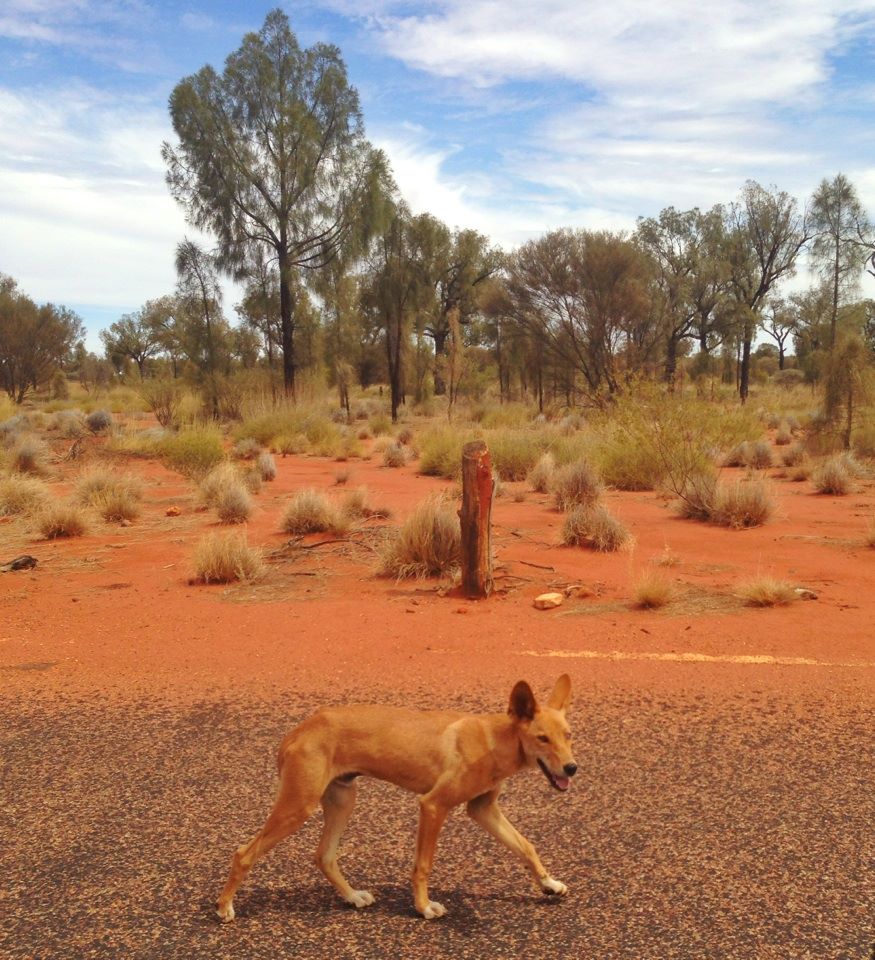

There are some great viewing platforms including the Uluru sunset viewing area and the Talinguru Nyakunytjaku sunrise viewing area, but of course you don’t have to save these spots for those times.
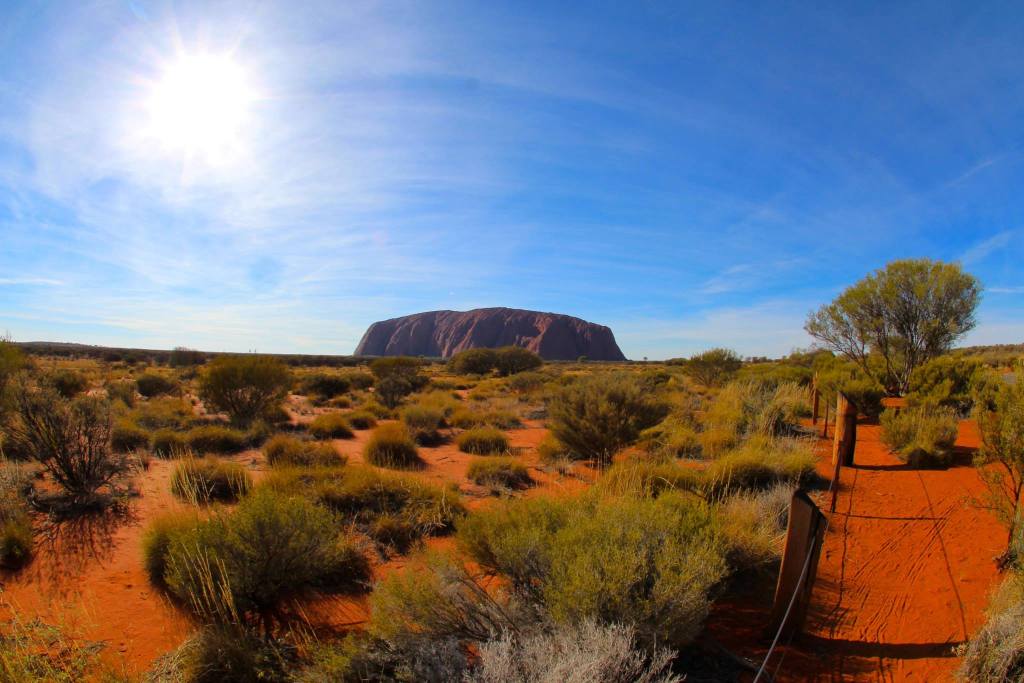
At the time we visited, climbing was still allowed although controversial. Wade decided to head up Uluru as the climb was open but I opted out of the “climb” for it is sacred and I respect the Aboriginal’s wishes. It’s quite sad, actually – and you learn about this at the Uluru Cultural Centre that a lot of tourists disregarded the wishes of the Aboriginals to not climb Uluru, because to the tourists it seemed to be just another ‘rock’ that they could ‘conquer’ and buy a souvenir stating ‘I climbed Ayers Rock’. I felt a sense of achievement as I signed the ‘I didn’t climb Uluru’ guest book inside the cultural centre – but each to their own!
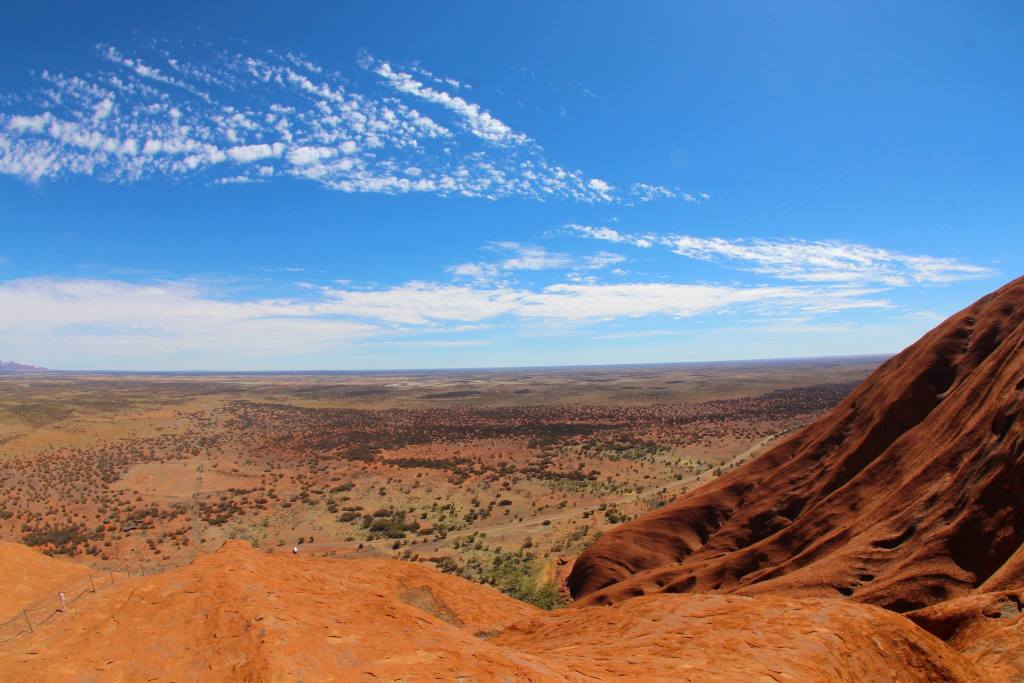
Above: Wade’s view from the top
Kata Tjuta & the Valley of the Winds walk
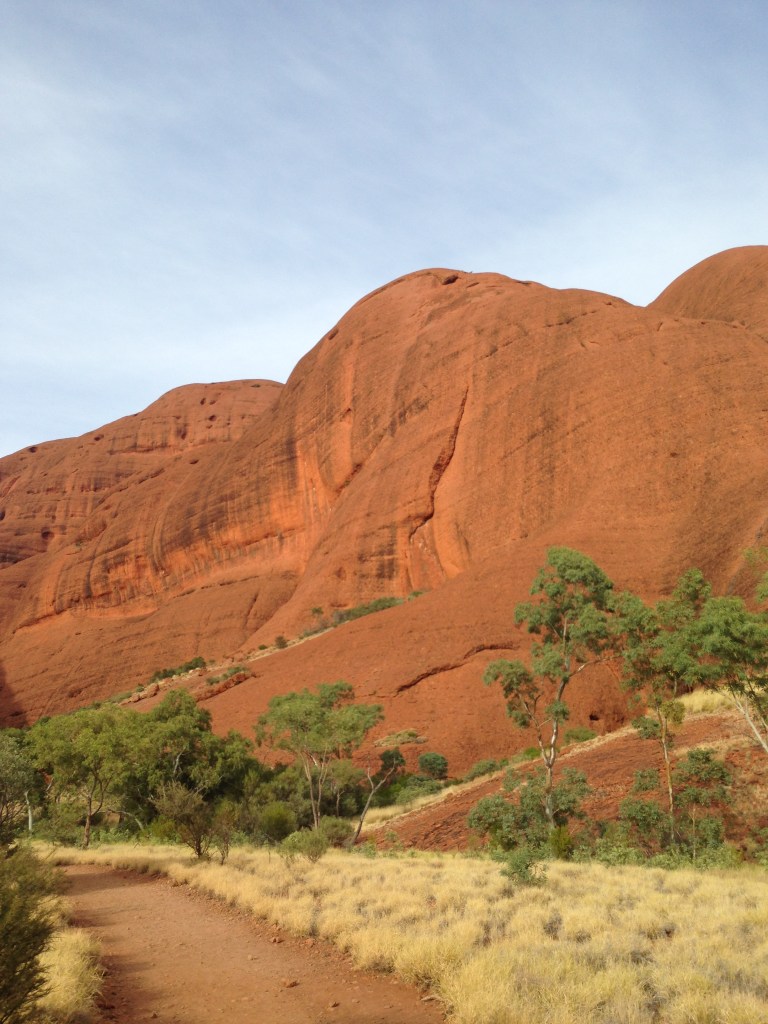
On our drive towards Kata Tjuta, first light appeared and the area around us was awakening. Typically a 45 minute drive, it soon became longer as we made stops along the way to capture the sunrise views. We arrived at the Kata Tjuta Dune Viewing Area to watch the sunrise, with lots of crowds and flies to join but it was worth it as we watched the changing colours of both Kata Tjuta and Uluru in the distance. Walpa Gorge is a short 2.5km return trail that takes you through the gorge between the towering dome walls.
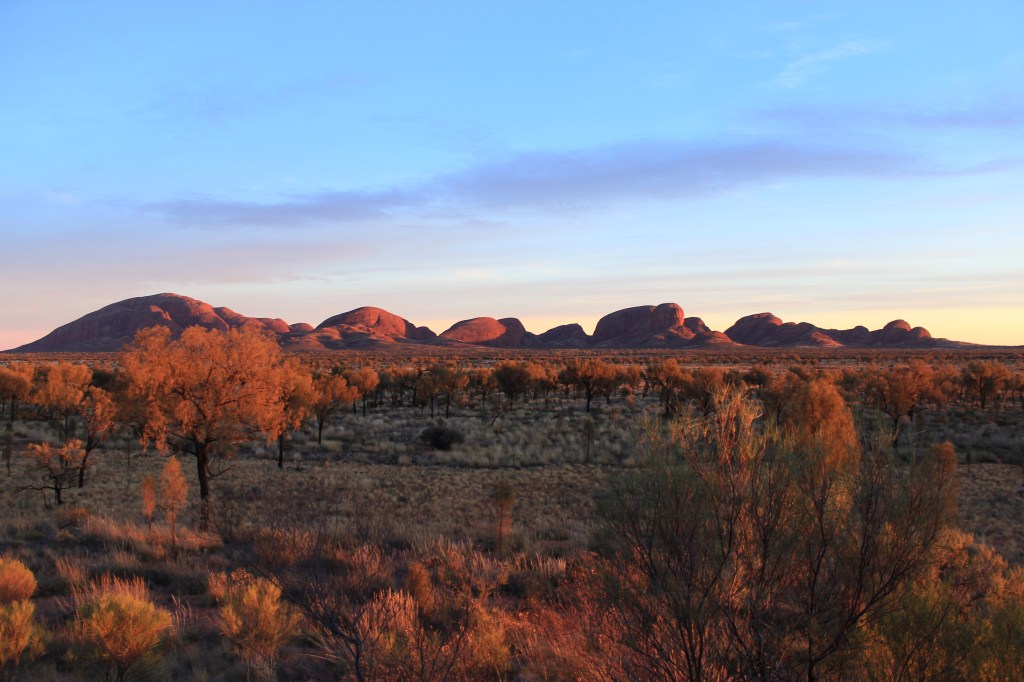
We embarked on the Valley of the Winds trail, a 7.4km loop that is graded moderate and takes approx. 4 hours but completely worth it as you scale the track through the middle of these giant sandstone domes. Kangaroo’s joined us as they jumped past us through the shrubs. There are two lookouts along the way that offer exceptional views; the Karu lookout and the Karingana lookout – I really recommend visiting Kata Tjuta if you have time whilst in Uluru. The walk is very rewarding! Just don’t forget a hat, sunscreen, lots of water, comfortable walking shoes and your fly net.
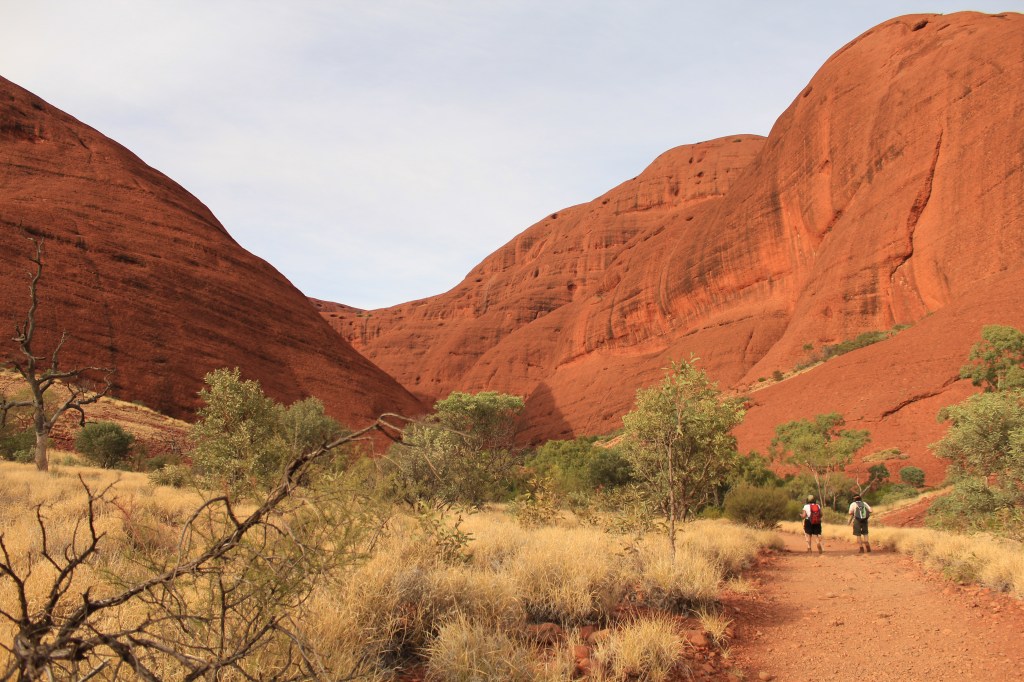
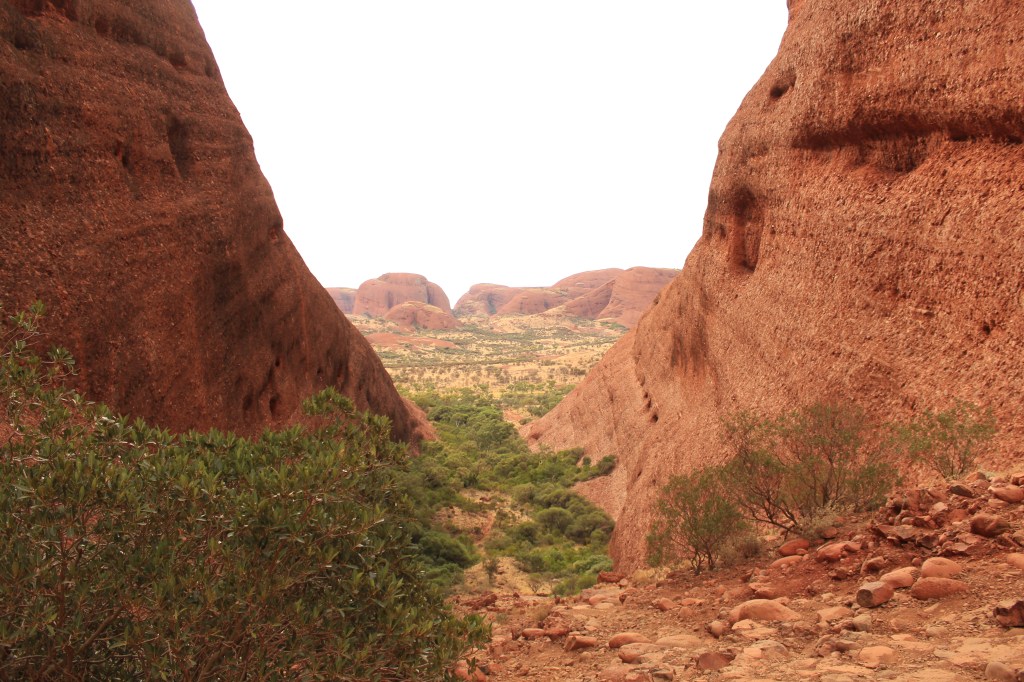
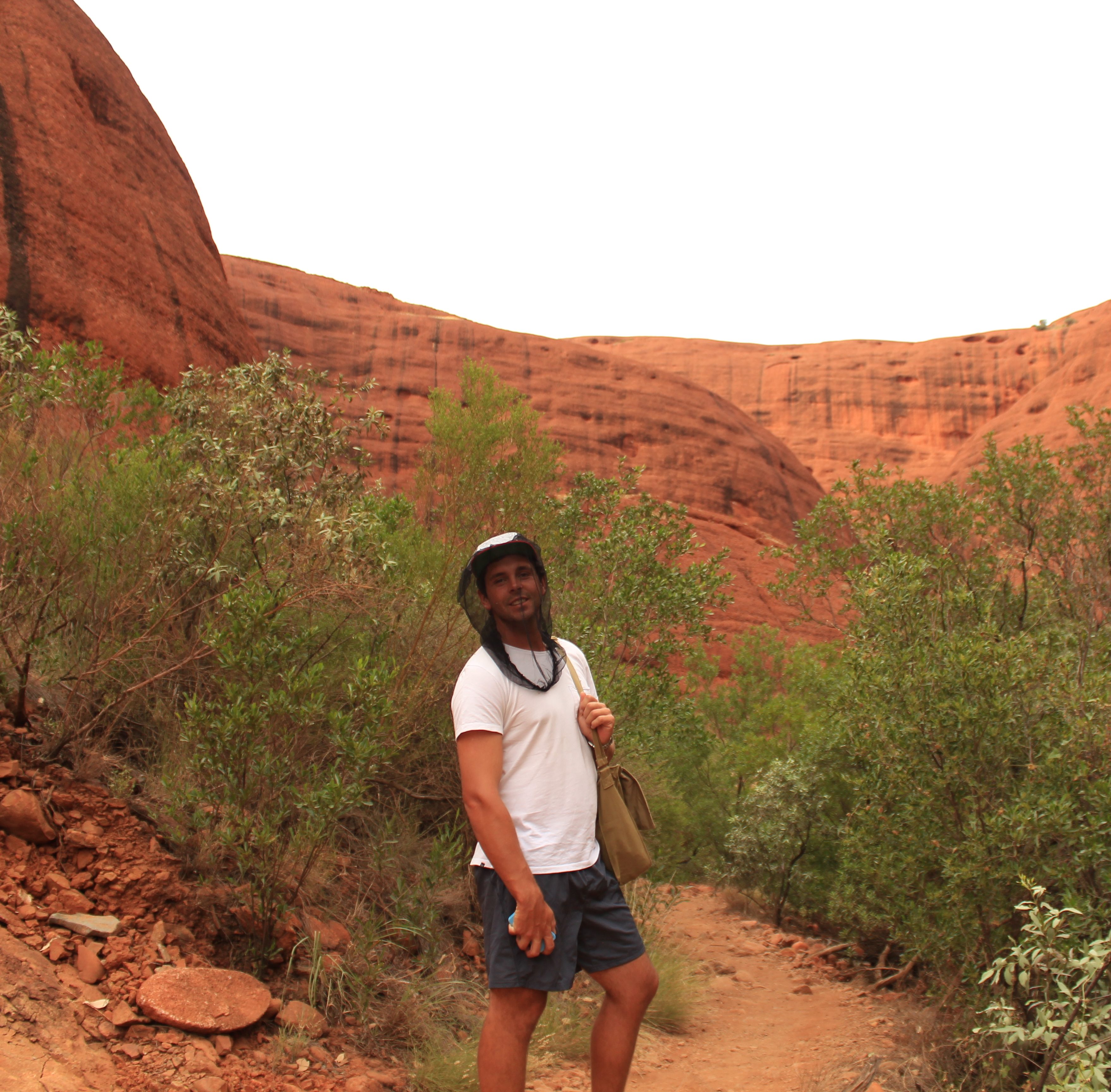

Above: can you spot the kangaroo?
Sunrise Camel Tour
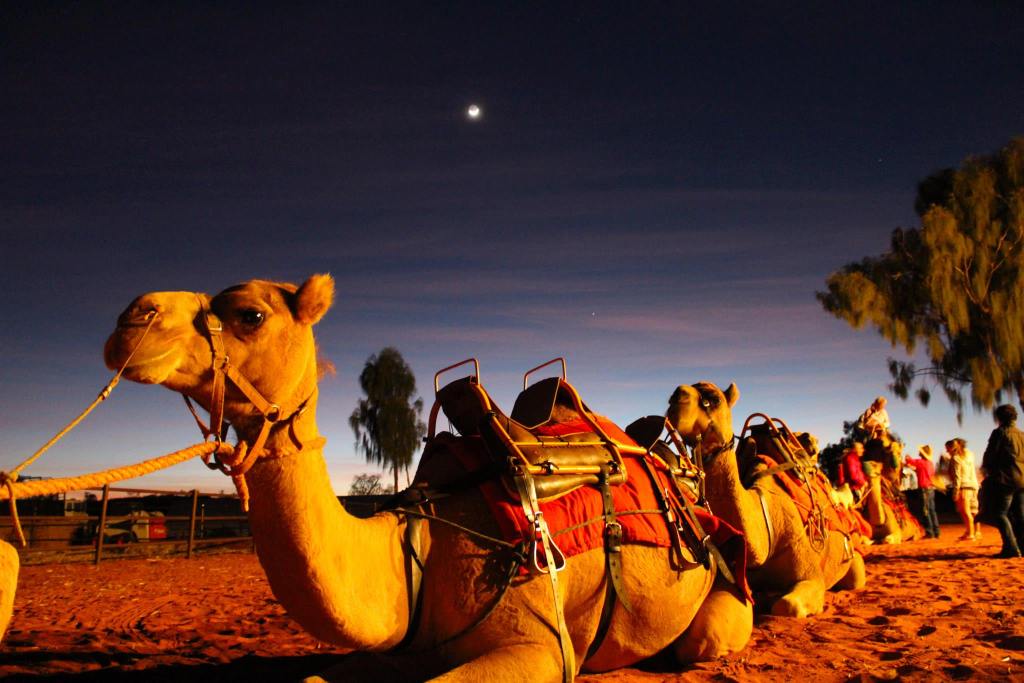
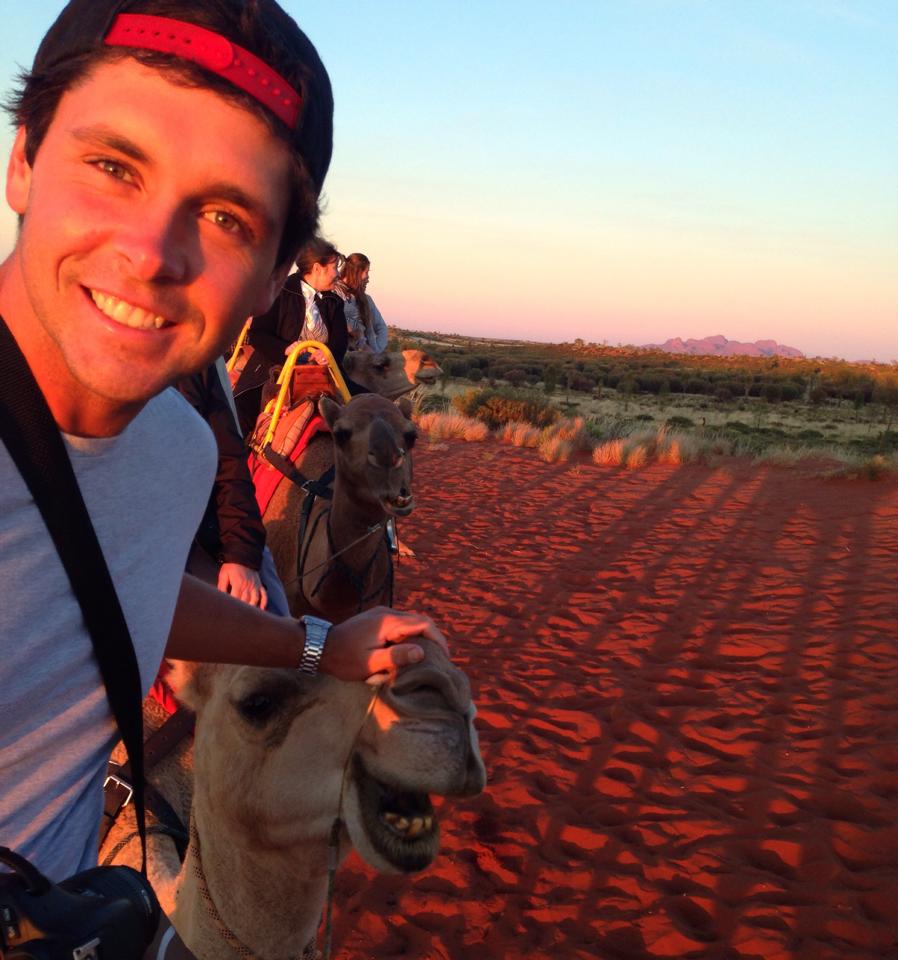
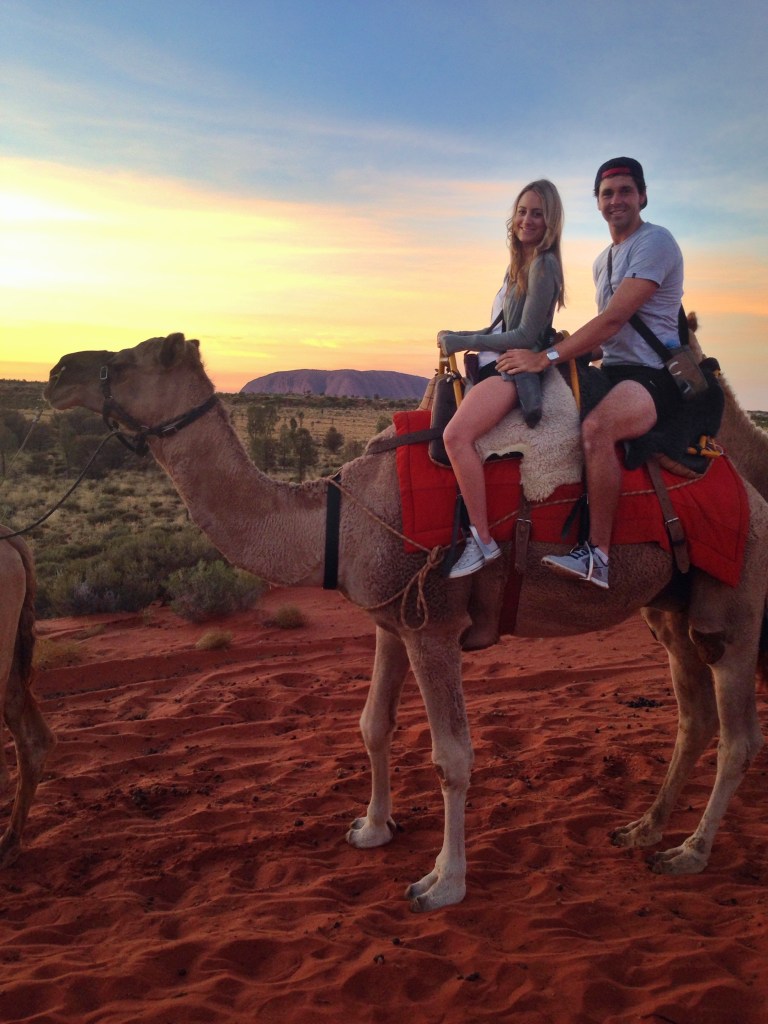
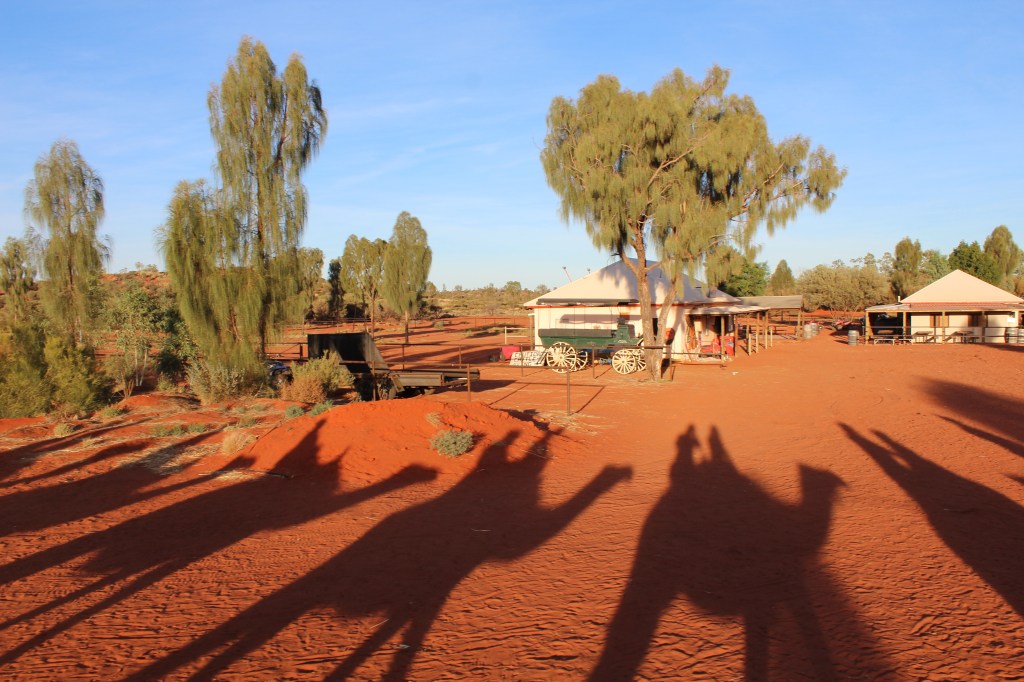
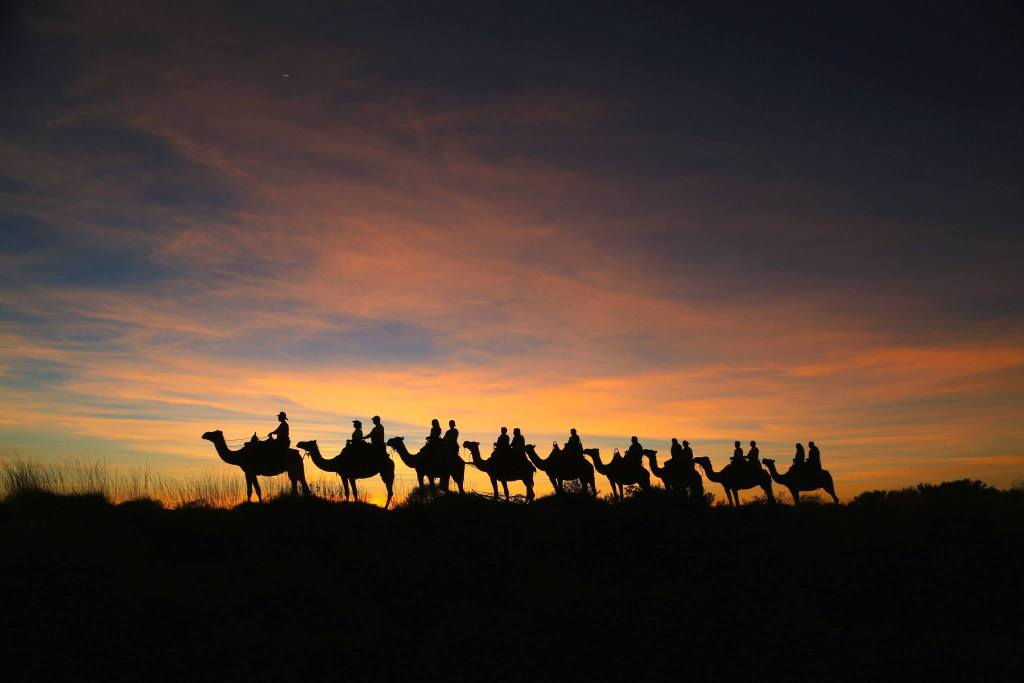
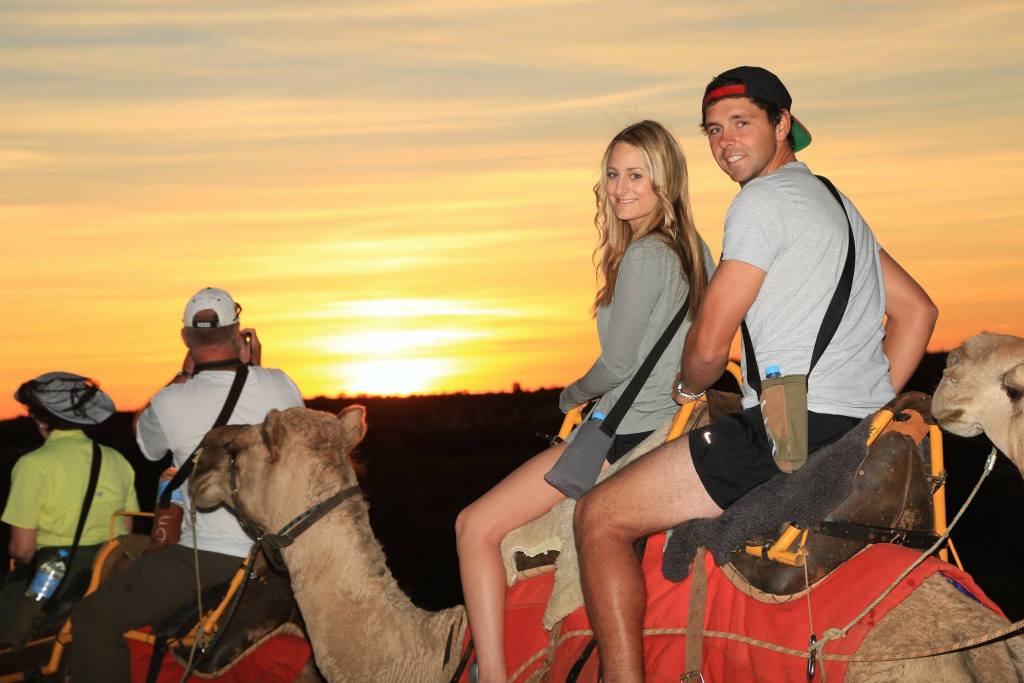
A great way to see Uluru is through the outback via camelback. We arrived at the camel farm an hour before sunrise. On arrival, we were given an introduction from our tour guide Wade, who had lots of great information about Uluru, the camels, flora and fauna. We met the camels that were going to take us out on the ride through the desert, including their newest addition ‘Milkshake’ the baby camel.
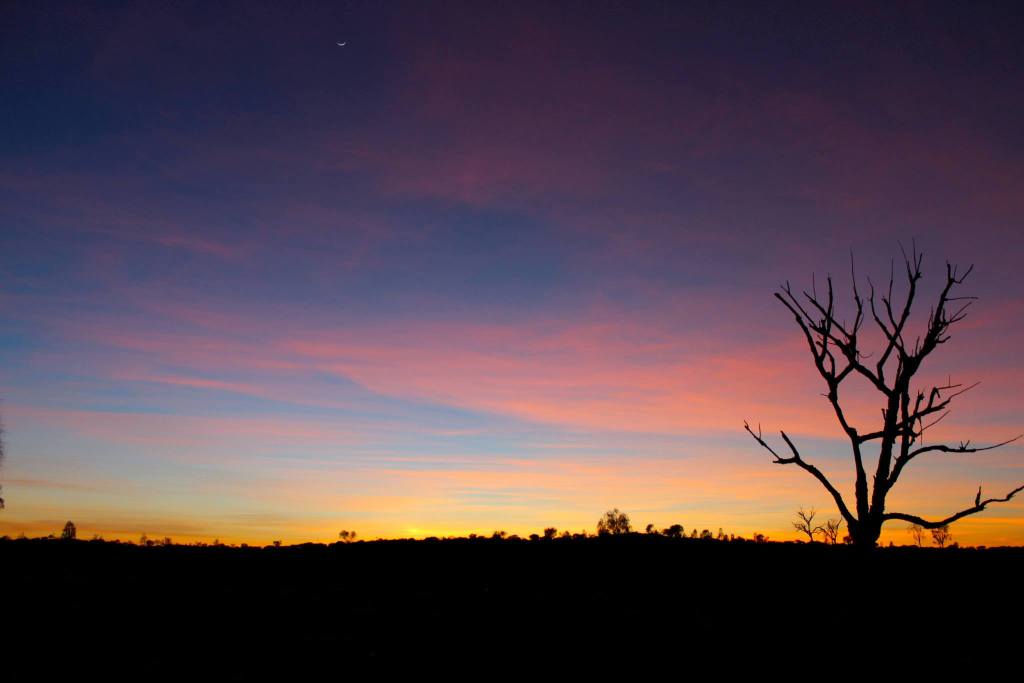
As the sun rose over the red desert sands, Uluru and the surroundings started to come alive. You could see Kata Tjuta in the distance and it’s one of those spectacular mornings that I won’t be forgetting quickly. Damien Hill was the photographer who took amazing photos of the group. I’ve posted these at the end of the blog but it was great that we could bring our own cameras too. After the ride we came back to the farm for freshly baked damper and hot beverages for breakfast. I really recommend this tour and if I ever return, I’d love to join the sunset tour.
Sounds Of Silence Dinner
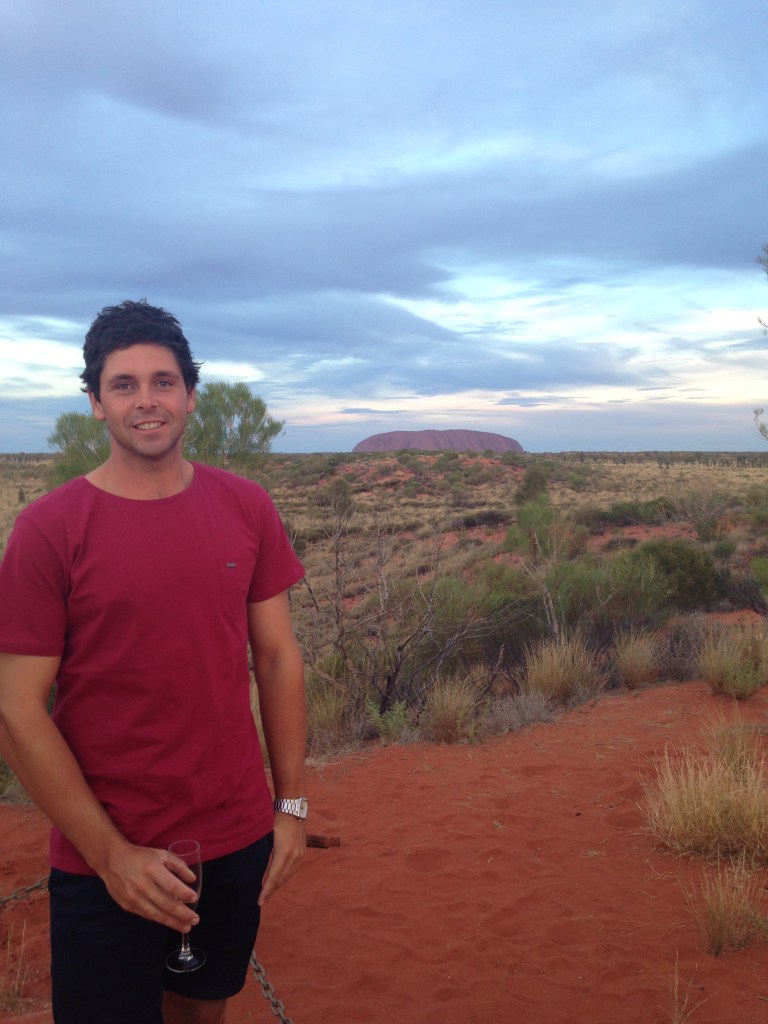
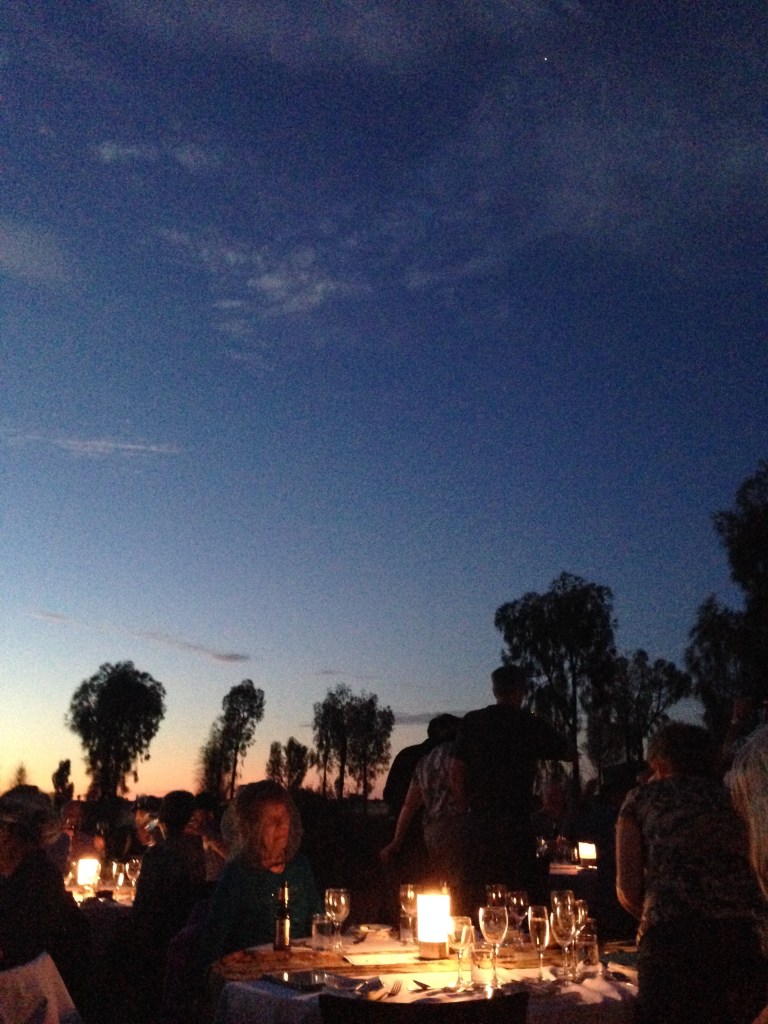
Dining outside under the stars, with Uluru & Kata Tjuta sitting in the distance was another special moment we got to experience. With welcome drinks on arrival, including Australian wines, beers, soft drinks and canapés, we enjoyed a Didgeridoo performance whilst mingling with other tour goer’s, mostly visitors from the UK and the States, as we awaited our table. A buffet style meal, there was plenty to choose from including kangaroo, chicken, fish, salads and dessert. As the sun went down, the lights were diminished so we were in ‘the sound of silence’’. Included was a star gazing experience where we were pointed out the Southern Cross, the Milky Way and even mars!


Where we stayed
Yulara is a township of resorts just outside the Uluru-Kata Tjuta National Park. You’ll find accommodation ranging from budget to high end. The town centre includes the accommodation, visitor centre, shopping centre and cultural activities throughout the day. Surprisingly, the restaurants and food in Yulara is amazing! Desert Gardens had the best ‘all you can eat’ buffet breakfast. Arnguli Grill had amazing meals, including kangaroo and Australian wines… and the staff were very friendly. The restaurants are a little pricey but hey, you’re not staying in Uluru every day. We stayed at Desert Gardens hotel. Rooms were basic but clean and tidy which was all you really needed as you weren’t spending too much time in your hotel room.
Stay @ Desert Gardens – Standard Queen Room
$238 per night with breakfast included.
How we got there
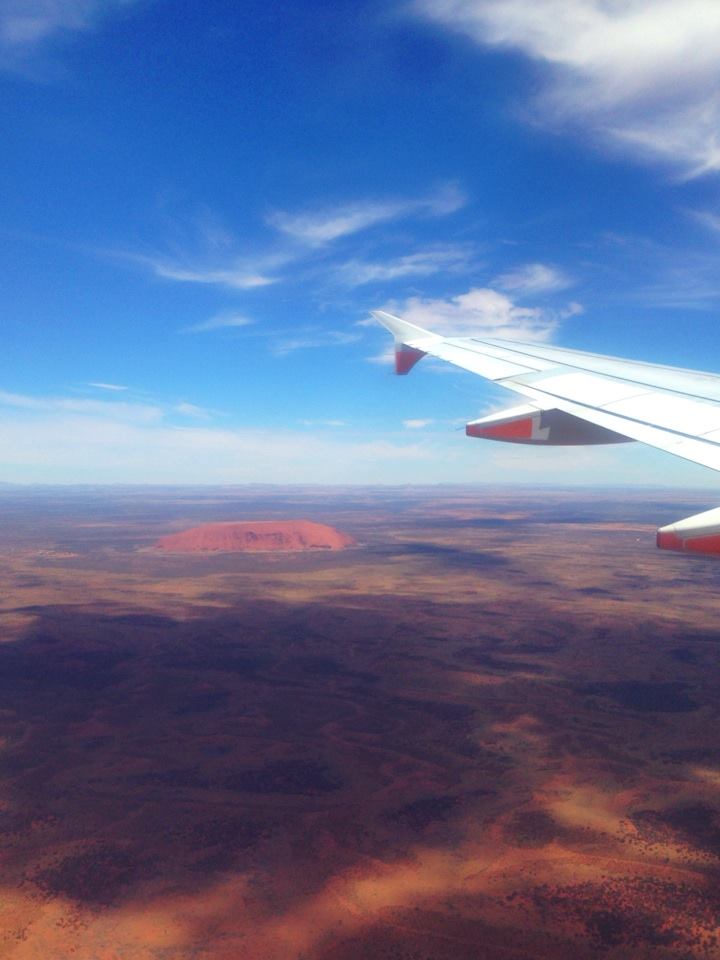
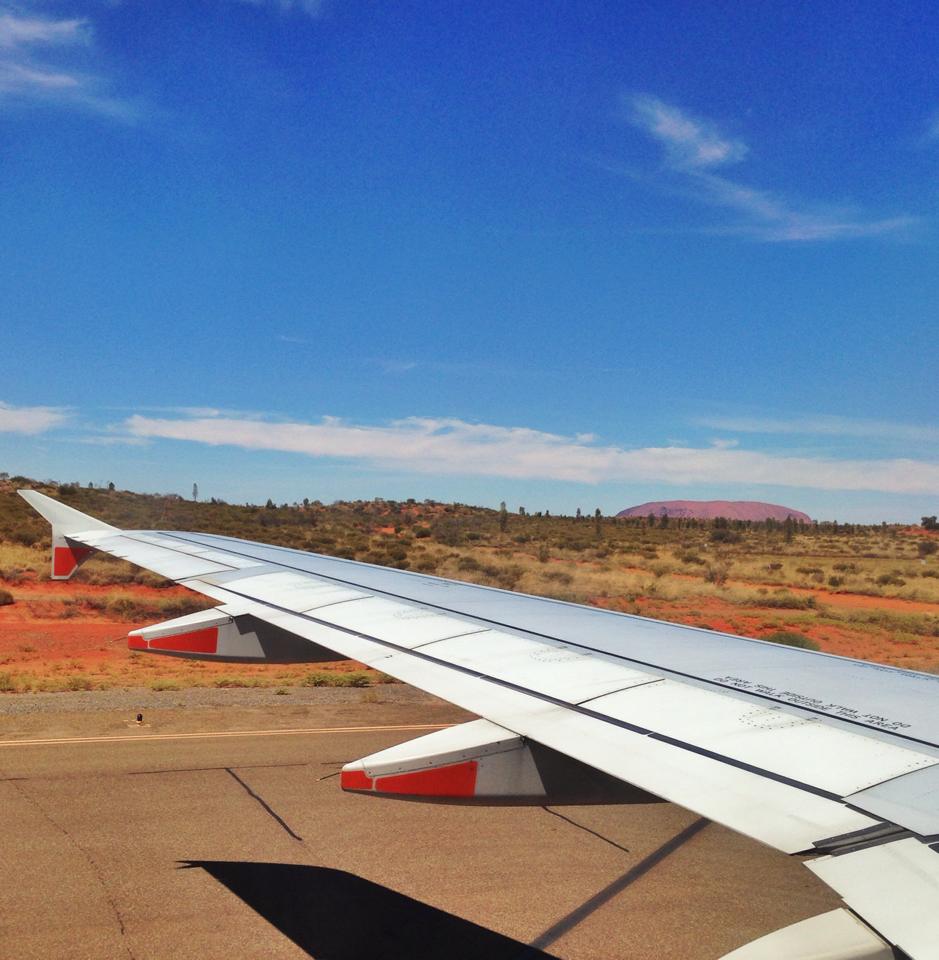
We flew Sydney to Uluru with Jetstar after catching another one of their sale fares with dates covering my birthday weekend. If you are flying from Sydney, sit on the left hand side (seat A) as you will have the first sight of Uluru as you are coming in for landing and it’s spectacular.
Flight @ Jetstar Australia. Sydney to Uluru (3h 40m)
$139 pp one-way
How we got around
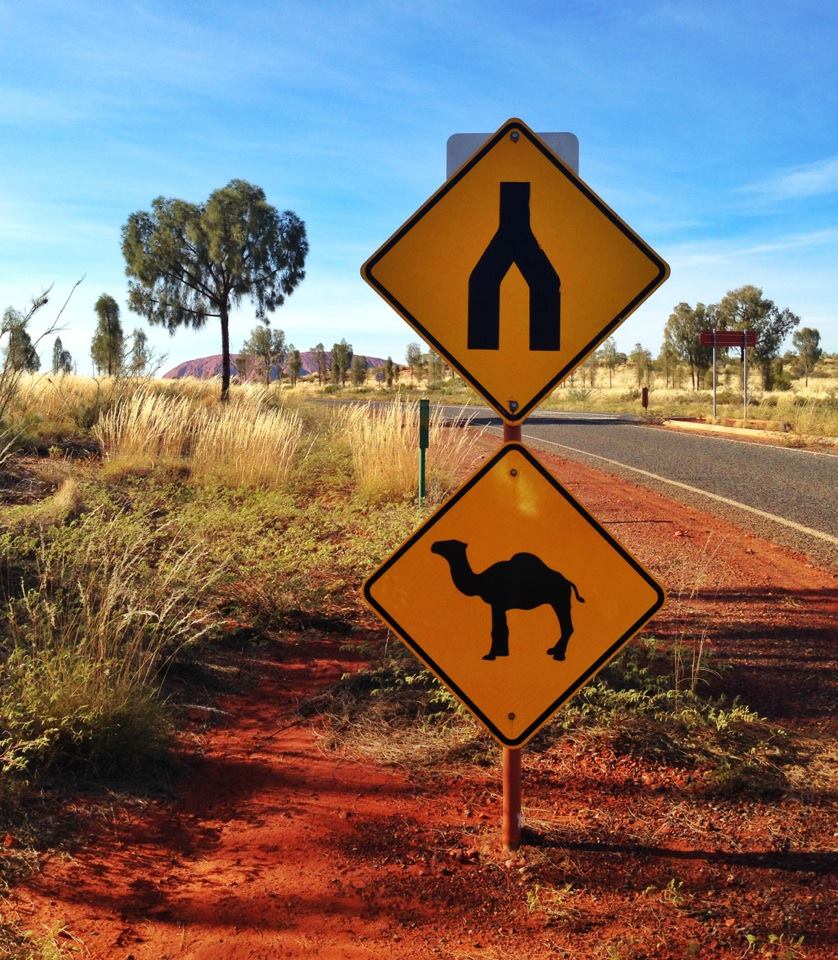
For the most flexibility, we find hiring a car and driving is the best way to explore Uluru-Kata Tjuta National Park. You will need a national parks pass which can be purchased from the park entrance station.
Hire Car @ Avis (3 day hire) $216.29
3 day National Parks pass $25.00

The amazing thing about Uluru to me is the feel in the atmosphere. It really is an amazing place. The difference in colours from sunrise to sunset and everything in between – It’s simply magical and I can understand why it is such a spiritual place to the native Aboriginals, the traditional custodians of this land.

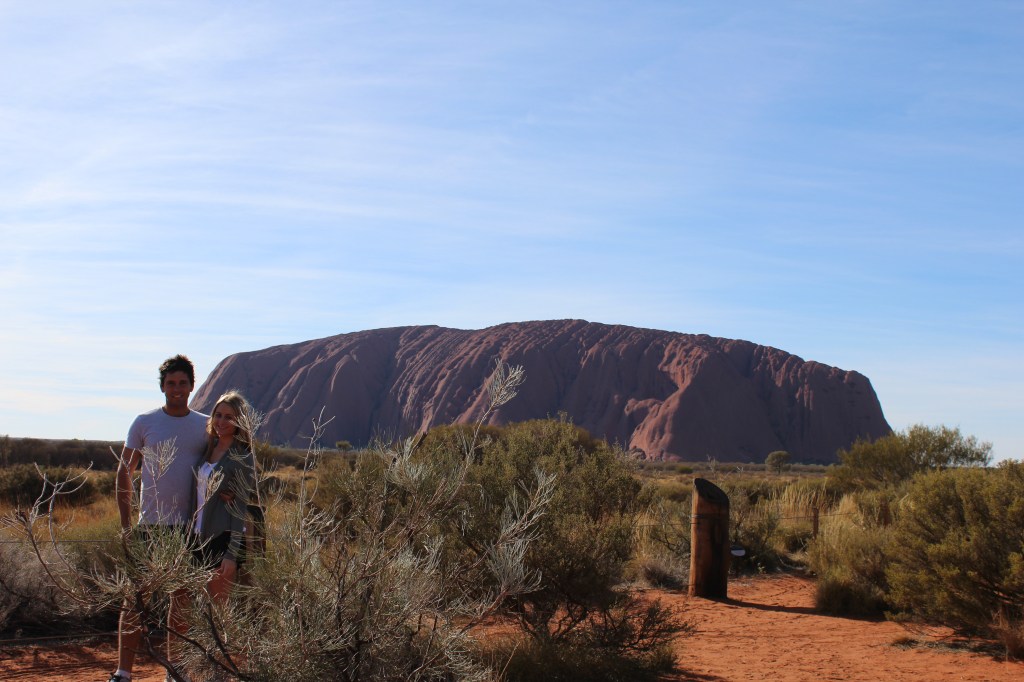

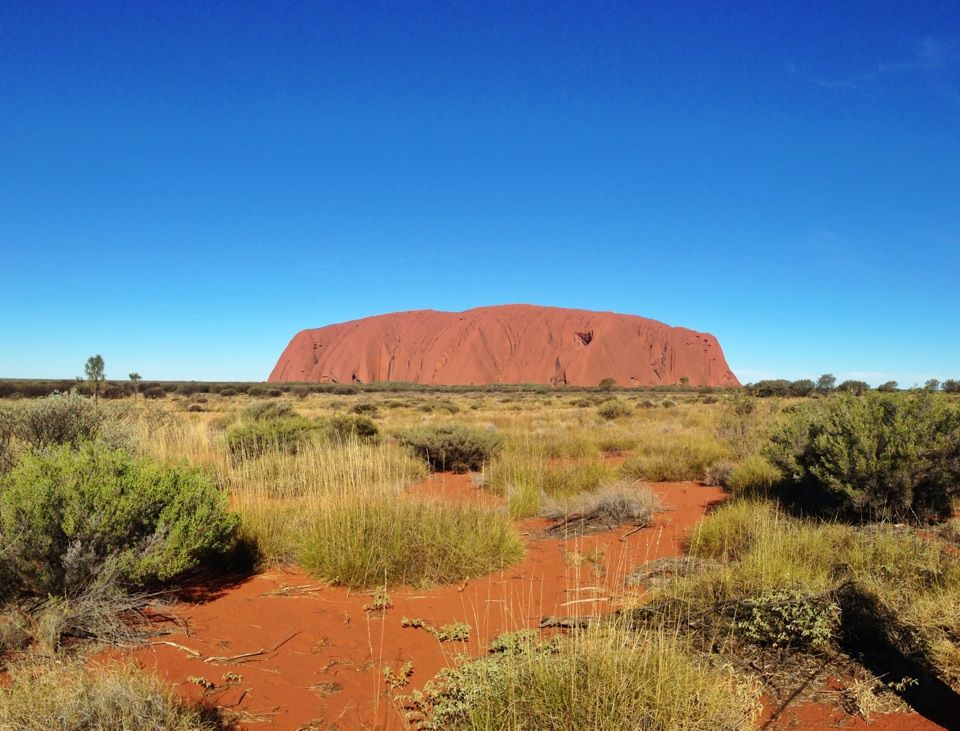
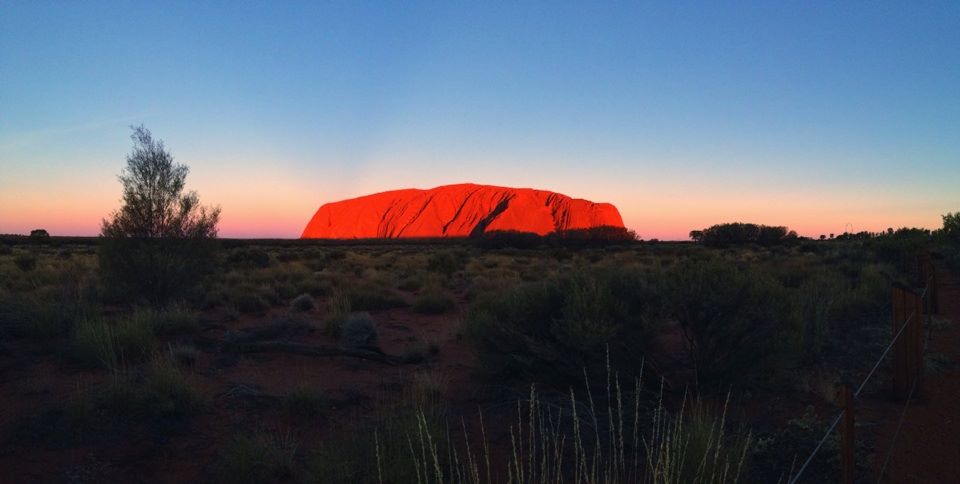
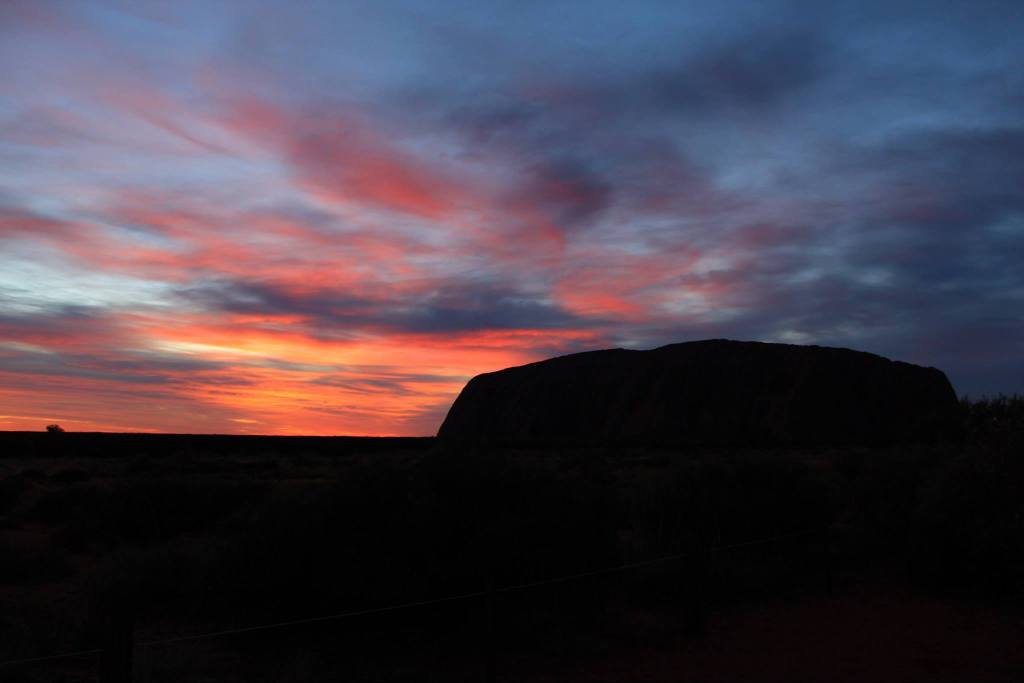
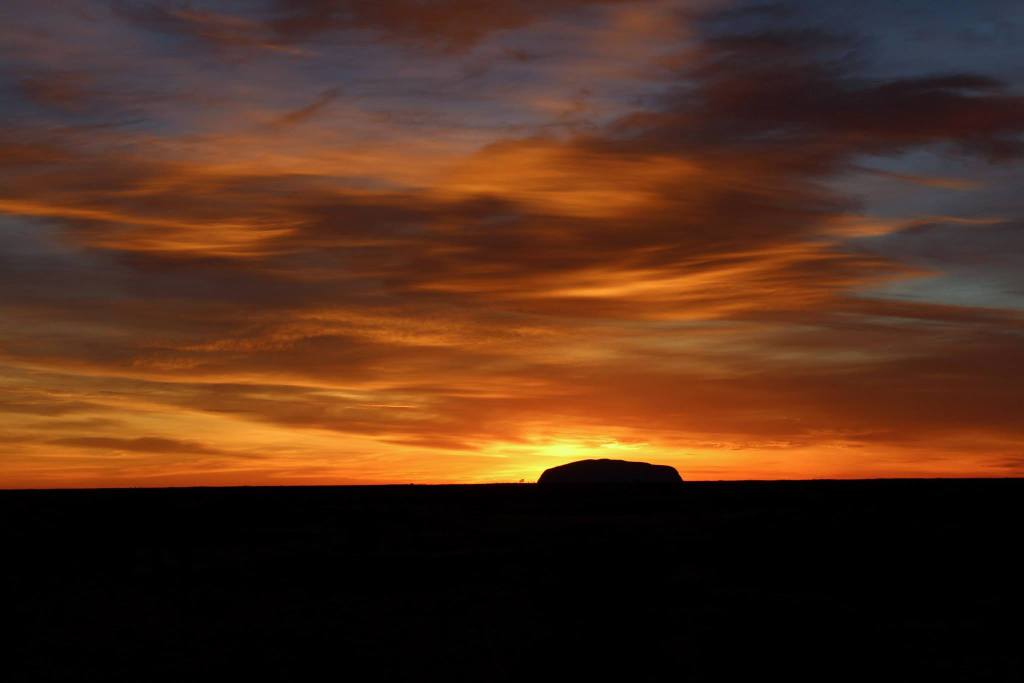
Below: Uluru Camel Tour – Photos by photographer Damien V Hill


 ONLY HAPPY WHEN I TRAVEL